
 Image 1 of 1
Why This Training Matters
DEI is in crisis. Politically, it's under attack. Organizationally, leaders are questioning its ROI. And while the underlying values—equity, belonging, fairness—remain critical, DEI frameworks often fail to deliver structural change because they don't address the core issue: power.
You can mandate trainings, diversify hiring, and measure representation—and still have:
Decision-making concentrated at the top
Cultural toxicity thriving despite inclusion initiatives
Inequitable outcomes baked into governance, strategy, and operations
Why? Because identity-focused approaches miss the systems, structures, and power dynamics that actually determine who thrives, who's heard, and what gets done.
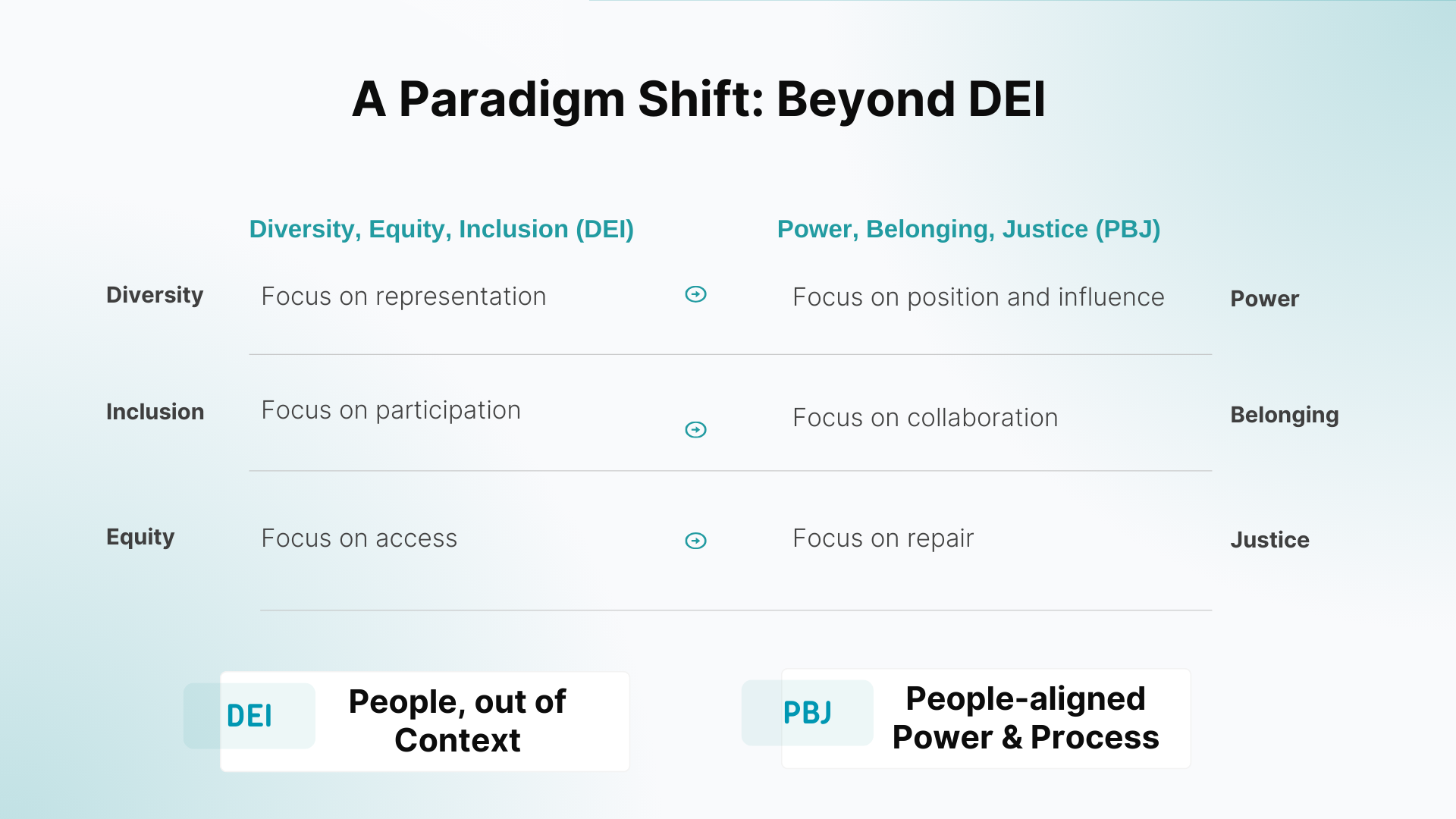
Enter PBJ: Power, Belonging & Justice—a framework that addresses what DEI misses while delivering what every leader cares about: functional, resilient, effective organizations.
What You’ll Learn & Walk Away With
1. DEI vs. PBJ: What's the Difference?
Why DEI's focus on identity and participation falls short
How PBJ's focus on power, position, and process addresses root causes
The risk of staying with superficial approaches in a politicized environment
2. The Three Pillars of PBJ
Power: How decision-making, influence, and agency are structured (and why that matters for efficiency AND equity)
Belonging: Moving beyond "inclusion" to structural conditions that enable contribution and co-creation
Justice: Building systems that address inequities, enable accountability, and support organizational resilience
3. PBJ in Action: Concrete Examples Across Organizational Pillars
Culture: Diagnosing power dynamics in feedback, psychological safety, and belonging
Governance: Examining decision structures, accountability, and information flows
Strategy: Assessing whose voices shape priorities and how trade-offs are navigated
Policy: Building systems that surface harm, enable repair, and align rules with functionality
4. Aligning People, Power & Process
A practical framework for "dealing with difference" that drives both justice and organizational capacity
Tools and guides you can use immediately to assess and shift your own systems